

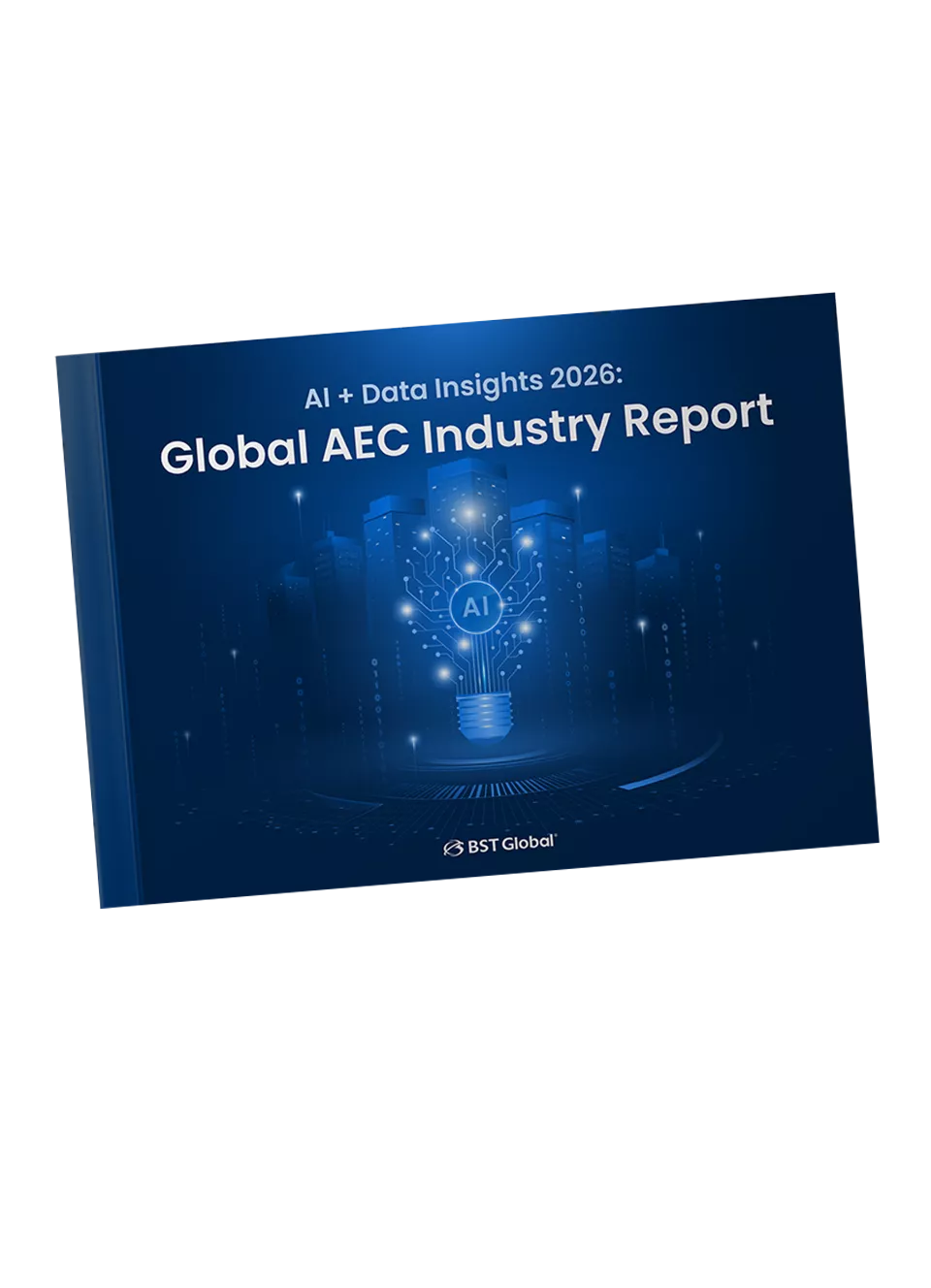

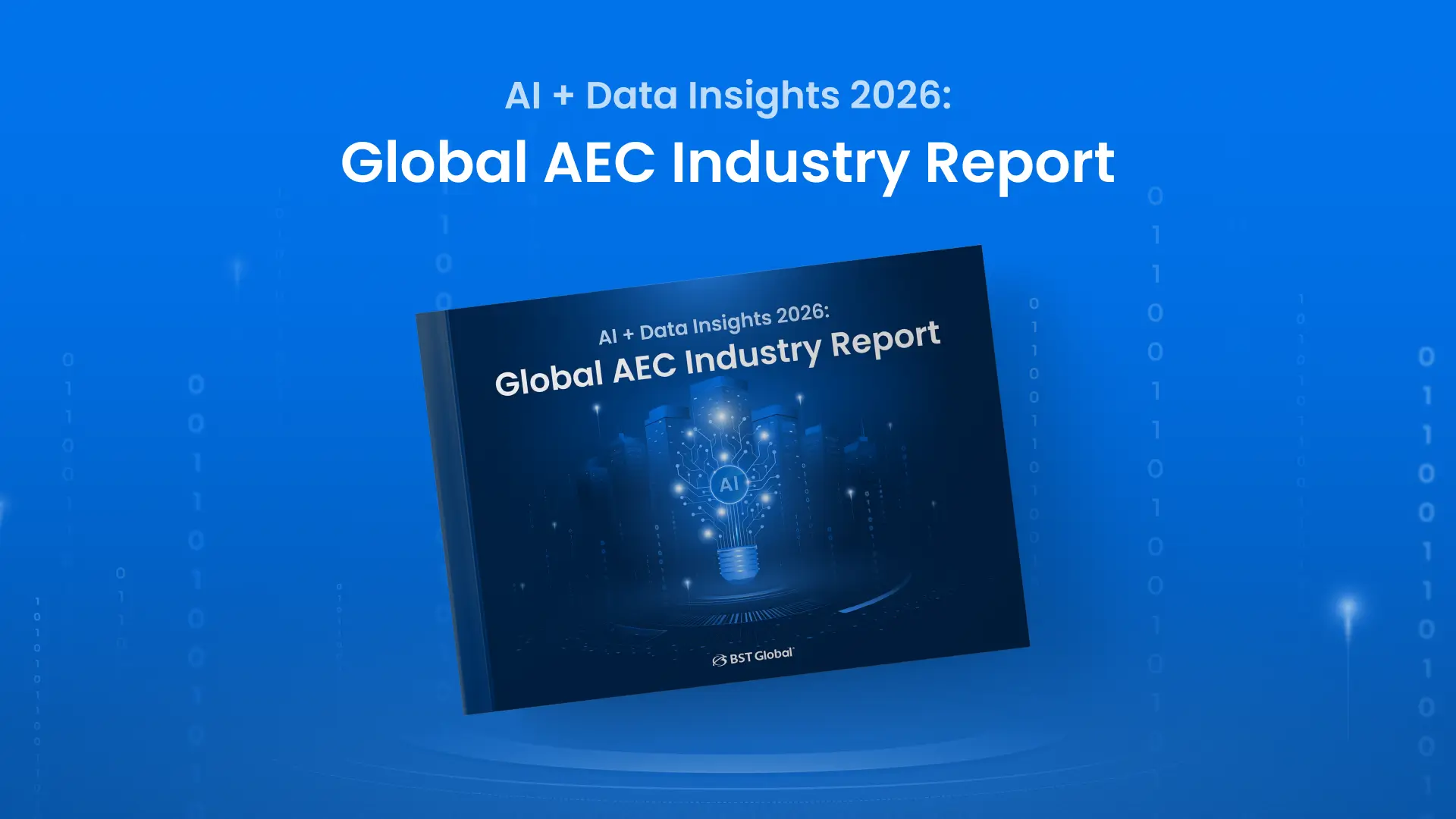
BST Global’s “AI + Data Insights 2026: Global AEC Industry Report” explores how artificial intelligence and data-driven technologies are transforming architecture, engineering and environmental consulting (AEC) firms worldwide. This article provides an overview of the report findings and key themes, highlighting current AI adoption levels and firms’ engagement with emerging technologies such as GenAI, predictive analytics, LLMs and autonomous agents. The report also examines challenges and provides actionable insights to help AEC firms drive value, mitigate risk and build a future-ready AI strategy.
AEC in the Age of AI
Advancements in AI are creating new opportunities for architecture, engineering and environmental consultancies to evolve how they operate, compete and deliver value. AI is no longer an emerging concept that firms “may want to start exploring.” It’s an operational imperative that firms need to embrace if they hope to remain competitive.
We surveyed tech leaders and digital decision makers from AEC firms around the world to inform our “AI + Data Insights 2026: Global AEC Industry Report.”

Your Resource for a Successful AI Journey
Our second annual report provides a perspective on the current state and future impact of AEC-specific advancements in AI. In it, we examine survey respondents’ usage, expectations, challenges and outcomes in five key areas of their AI journey:
- AI Adoption & Usage: AI’s influence on the AEC industry is undeniable and most professionals recognize its importance to their firm’s success. However, very few feel their organization is adequately prepared for widespread integration.
22%
Less than 1/4 of respondents claim readiness at a mature or advanced level, with most indicating that their firms are still in the pilot or exploration stage.
- Evolving AI Technology: Use case opportunities expand as powerful tools like GenAI, predictive analytics and autonomous agents continue to improve. In response, firms must evolve their AI strategies to focus on true value-driven integration.
Top GenAI PrioritiesIncrease Core Business Revenue 77%Decrease Core Business Costs 65%
- AI Strategy & Business Focus: When AI and business strategies are aligned, AI becomes a true accelerator for an organization’s objectives. Despite this, survey respondents indicated that strategic alignment is largely lacking for AEC firms.
Only 38% of respondents feel that their organization’s AI strategy aligns with its business strategy, and 25% indicated that these strategies are discordant.
- AI Risks & Challenges: As with any new technology or process change, AI comes with risks and challenges. Besides organizational barriers to adoption and scaling, concerns over data security and accuracy lead most AEC firms to take a cautious approach when engaging new AI tools.
 Paul MurphyChief Information OfficerAs AI and digital platforms expand, addressing ethical concerns and bias and ensuring transparency and responsible deployment really become critical.
- AI Outcomes & Workforce Impact: AI integration can’t succeed without addressing the human factor, and the sentiment toward AI in the workplace can differ greatly between a firm’s leadership and its workforce.
Believe It or Not …85% of respondents do not anticipate AI technology replacing employees or roles.
BST Global partnered with the AI + Data Consortium and ACEC’s Technology Committee on this examination of AI in the AEC industry. Click below to access this year’s report and explore more insights and recommendations for a successful AI journey.