


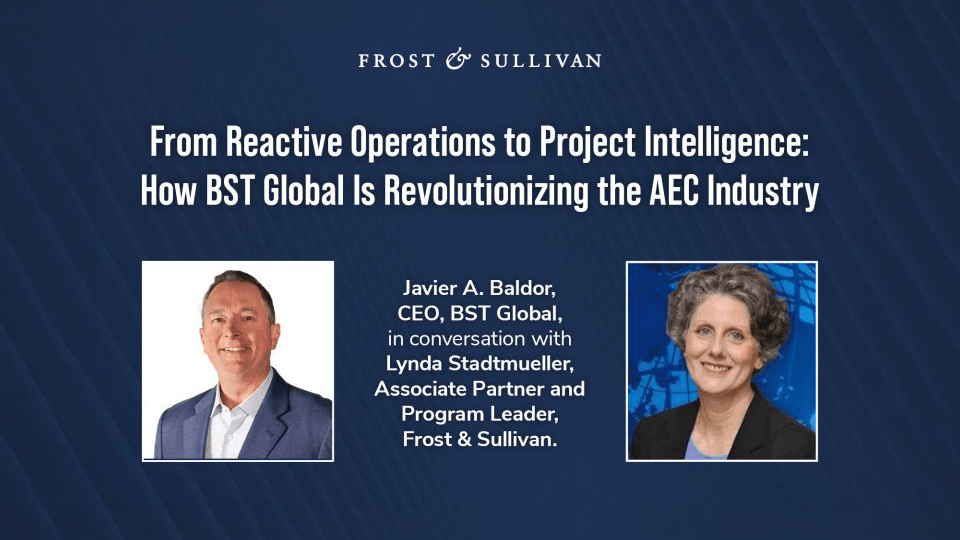
In a recent conversation with Frost & Sullivan’s Lynda Stadtmueller, BST Global Chief Executive Officer Javier A. Baldor unpacks how AI‑powered ERP innovation is helping AEC firms streamline operations, connect teams and remove workflow barriers. Industry consortiums, strategic partnerships and trust‑driven customer relationships all play a critical role in driving innovation efforts. The interview underscores AI’s broader impact on business models, organizational structures and competitive dynamics, sparking transformational growth for the AEC industry.
Some of the key themes Javier and Lynda explore in the interview include:
- AEC Is Shifting from Reactive to Predictive: The industry is moving away from retrospective reporting toward AI-powered, forward-looking decisions.
- AI-Driven ERP Solutions Are Transforming Operations: ERP systems are evolving into predictive intelligence platforms that integrate data, automation and analytics to drive real-time performance.
- Eliminating Friction Is the Primary Goal: Disconnected workflows and teams create inefficiency; BST Global solutions focus on simplifying the way firms work, unifying their businesses and unleashing their full potential.
- AI Agents Enable Intelligent Automation: Autonomous agents can handle repetitive, manual tasks (e.g., billing) to improve efficiency, accuracy and speed while preserving human oversight.
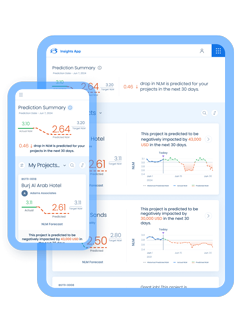
- Predictive Analytics Powers Profit Intelligence: AI-powered tools can detect anomalies, forecast outcomes and calculate impact, which helps firms optimize profitability and act earlier in the project lifecycle.
- Trust-Based Partnerships Drive Adoption: Success means meeting clients where they are, co-creating solutions and building long-term, trust-based relationships.
This insightful discussion is part of Frost & Sullivan’s recently launched program, Transformational Growth Leadership, in which Frost & Sullivan executives interview the CEOs of successful, innovative companies.
Read the full article here.